

₹899
₹5,997
85% OffBiggest Sale of the Year!
0H:0M:0S
Final Price inclusive of all taxes
Cash on Delivery
Free Delivery
Get it delivered in 4-9 days
size
25 ML
Product Information
Brand
Van Ousi
Country Of Origin
India
Ideal For
Unisex
Component
100% Ayurvedic
Pack Of
1
Ingredient
To Use Rosehip Oil, Apply 2-3 Drops To Clean, Slightly Damp Skin (Face, Neck, Dã©Colletage) After Water-Based Serums And Before Heavier Creams, Massaging Gently In Upward Motions, Ideally At Night, And Always Do A Patch Test First. It Can Also Be Mixed With Moisturizer For Body Use Or Applied To Scars/Stretch Marks On Healed Skin. For Facial Use (Am & Pm) Cleanse & Tone: Wash Your Face And Apply Toner If You Use One. Dampen Skin: Lightly Mist Your Face Or Let It Stay Slightly Damp After Cleansing/Toning For Better Absorption. Apply Oil: Warm 2-3 Drops In Your Palms And Gently Massage Onto Your Face, Neck, And Dã©Colletage. Layer: Follow With Eye Cream And/Or Your Regular Moisturizer To Lock It In. Patch Test: Always Test On A Small Skin Patch First To Check For Reactions. For Body & Scars Direct Application: Massage Directly Onto Scars, Stretch Marks (On Healed Skin), Or Dry Patches. Mix-In: Add A Few Drops To Your Body Lotion For Extra Hydration. Tips & Cautions When: Best Used As The Last Step In Your Routine At Night, But Can Be Used In The Morning Under Spf. Amount: Start With 2-3 Drops; A Little Goes A Long Way. Storage: Keep In A Dark Bottle, Often Refrigerated, To Maintain Freshness. Retinoids: Avoid Using Strong Retinoids With Rosehip Oil Due To Its Natural Vitamin A Content.
Type
Oil
Product Description
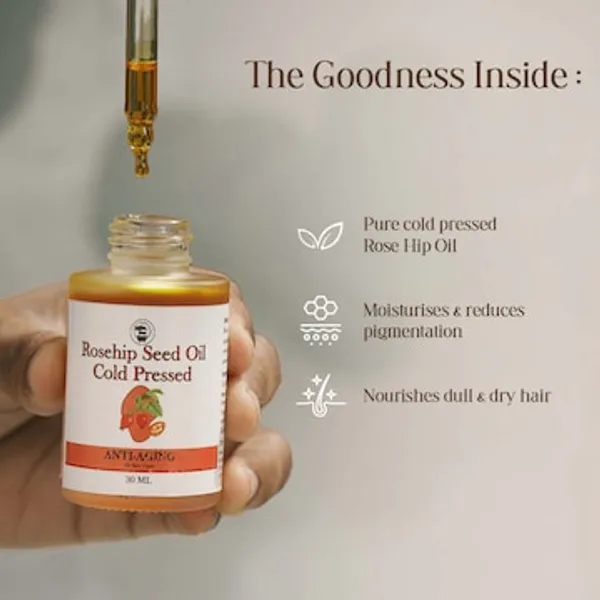
- Pure Rosehip Seed Oil: A natural pressed seed oil extracted from the seeds of wild rose bushes.
- Primary Botanical Source: Derived from Rosa rubiginosa, commonly known as rosa mosqueta, grown in the southern Andes.
- Alternative Source: Also extracted from Rosa canina, a wild rose species.
- Native Regions: Rosa canina is native to Europe, northwest Africa, and western Asia.
- Natural Extraction: Obtained through seed pressing to preserve its natural properties.